
Top 5 Trends Shaping Computers & Internet Tech in 2025


The world of computers and internet technology has never evolved the way it is. They are changing life, how work is done, and connecting life at all levels in manners never imagined before. Breakthrough developments such as 2025 would rewrite all those possibilities while raising innovation benchmarks.
More than quantum computing and life-changing, AI-powered solutions that revolutionize life the way it should be have come out-true upgraders of games and game changers.
It ranges from an immersive metaverse experience to the speed of next-generation connectivity. But keeping pace with these developments is no longer optional. In our series of top five, let's dive into shaping computers and internet technology for the future of tomorrow's digital world.
The Rise of Quantum Computing: Transforming Computational Power
Quantum computing is no longer a fantasy, but rather a reality being created and has concrete implications for various sectors. Where classical computers rely on binary systems of zeros and ones, quantum computers rely on qubits that can exist in multiple states at the same time, which enables the solutions of complex problems exponentially faster than the classical counterparts.
This can be in 2025, where the adoption will be spread to areas in cryptography, artificial intelligence and in climate modeling. Businesses, therefore, are likely to use quantum systems to accelerate supply chain efficiencies, maximize logistics and accelerate drug discoveries among a million other applications. The level of disruption in the processing which currently characterizes computing and the Internet will make this trend lead to a new wave in advancement.
IBM and Google are the first, but startups also make an entry with their applications, specialized in certain matters. These latest computer developments imply the deepest consequences for the safety of internet communications. Quantum encryption becomes an important tool for protecting sensitive information.
Suggested Read: Why Blockchain is Transforming Data Privacy on the Internet
Artificial Intelligence Everywhere: Beyond Automation
AI is still evolving and not static at all; it is expanding into new frontiers in creativity, personalization, and problem-solving. By 2025, artificial intelligence would be integrated into almost every sector of our lives. Predictive healthcare systems will detect diseases before symptoms occur, and AI-driven educational platforms offering personalized learning experiences are just a few examples of the vast potential for AI.
The integration of AI with internet innovations shall be a key development into future tech trends. Intelligent systems are the power behind search engines, redefining and revolutionizing digital marketing, while also defining how people consume information online. Generative AI tools create art, compose music, and even draft legal documents. It is becoming indispensable for AI as it makes one bridge between human creativity and computational efficiency.
With increasing artificial intelligence smartness and adaptability, ethical questions arise with respect to bias, data privacy, and transparency. The responsible development of this technology must be ensured so that this force for good in computers and internet technology remains beneficial and productive.
The Proliferation of Edge Computing: Faster, Smarter Networks
Demand for instant data access is a recent development in demand and edge computing steps to address the same. In comparison with cloud computing, edge computing brings processing closer to a device, such as smart devices, IoT sensors, or an autonomous vehicle from centralized servers.
In 2025, edge computing will definitely revolutionize the way human beings interact with connected devices. One internet innovation that can take its real-time decision in particular applications that need ultralow latency is on AR, VR, or even self-driving cars. Through edge computing, reducing its dependency on central networks can improve data privacy and security to address the important issues that are of relevance today.
Beyond the consumer, the implications are enormous, from manufacturing, retail, and logistics on operations for improving customer experiences. In the course of becoming one of the biggest trends in computers and internet technology, edge computing is opening a path toward smarter, faster networks, all of which meet the needs of an increasingly hyper-connected world.
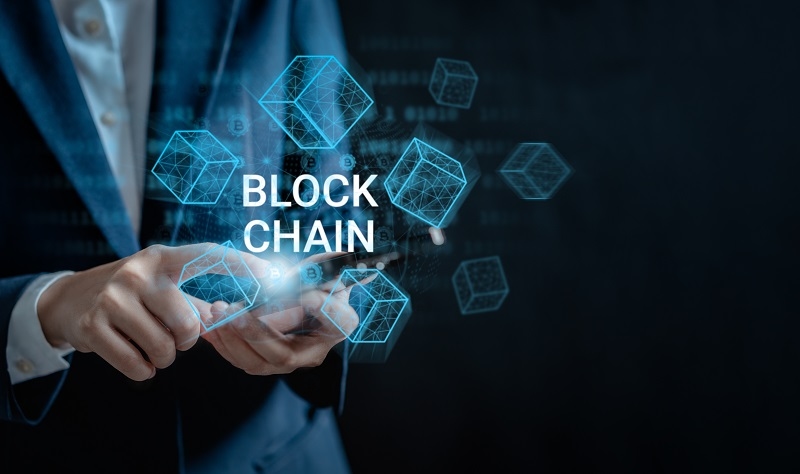
Blockchain Beyond Cryptocurrency: Redefining Trust Online
Although blockchain technology first came to fame as the backbone of cryptocurrencies, its applications have exploded. In 2025, blockchain technology will be pivotal in creating a more secure, transparent, and efficient internet.
One of the most exciting internet innovations inspired by blockchain is the decentralized identity. Decentralized identity technology gives people the power to own and control their online credentials without relying on centralized entities like banks or social media platforms. It results in a safer and more private digital experience, with reduced risks from data breaches and identity theft.
Blockchain is changing the way supply chains are managed, giving a real-time tracking and validation of items from the source to destination. It's changing the way intellectual property management is accomplished, providing safeguards for rights to creations within an increasingly digital world. With its embedding into computers and internet devices, it's reshaping the ways that trust can be established and maintained on the internet.
The Metaverse and Immersive Technologies: Redefining Online Experiences
This isn't science fiction anymore, at least not in the view of immersive technologies like AR, VR, and extended reality, which will connect people's virtual spaces by 2025 to work, socialize, and shop there. This is not simply gaming; it is a mature internet innovation that will make all the difference in terms of our engagement with the digital world.
Major tech firms are in a frenzy investing in and building metaverse platforms-a virtual office space, a hub to entertain, everything. There is reliance on the next generation of computer progressions-GPUs or graphics processors and algorithms-designed to really make the simulation interactive or realistic.
But besides these, e-commerce now also has an opportunity on the metaverse. Using virtual storefronts, which would allow 3D walk-in to products so that even consumers can visualize them for themselves before finally buying what they want; hence more exciting shopping will be available in the metaverse that most people will probably use instead of the existing online markets.
Also Read: Cloud Gaming: Transforming the Future of Entertainment
Knowing And Preparing for the Future
It can be seen how the fusion of these trends in computer and internet technology by the year 2025 illustrates the transformative nature of innovation. Quantum computing, AI, edge computing, blockchain, and the metaverse are not individual events, but the sum of several interconnected development processes that collectively form a future.
For businesses, it would be essential to be a step ahead of these trends for competitiveness. It would demand the latest computer advancements, ethical practices for AI, and safe blockchain solutions.
Similarly, individuals will need to build digital literacy to keep pace with this rapid pace of technological change and make informed decisions in an increasingly digital world. So, the year 2025 is all about innovations and new trends and knowing about them would do a lot of good for you!
Conclusion
The trends shaping computer and internet technology in the year 2025 also clearly point out how very dynamic this field is becoming. Be it AI driven automation, the rise of quantum computers and the metaverse, these changes really make the way we exist within the digital world undergo transformation.
Edge computing coupled with the expansion of networks into 5G signifies a more transformative nature of internet innovations and novel computer developments. As these trends take hold, they promise to open new doors for people and organizations alike.
Anyone interested in succeeding within an increasingly technologically enabled future has no alternative but to stay in line with such changes. All this means with the arrival of each new technology that the horizons of what can be achieved stretch further and further into an unprecedentedly connected and technologically advanced world.
This content was created by AI